

Photo by Philippe Serrand via Pexels
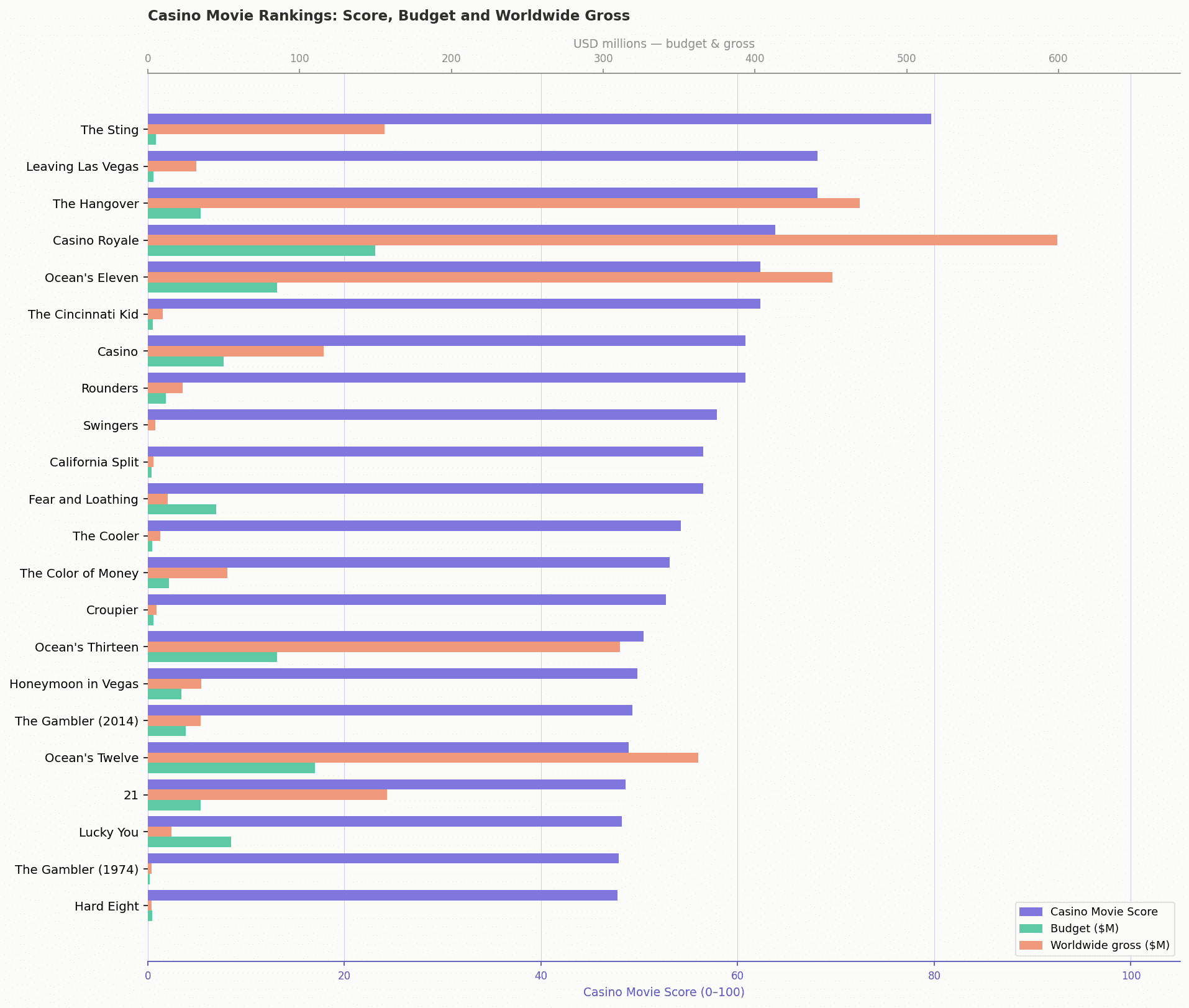
Casino films have been a fixture of Hollywood since the mid-1960s, offering a reliable formula of tension, glamour, and high-stakes decisions that plays well on the big screen. From Paul Newman hustling marks in The Sting to the chaos of The Hangover unravelling across Vegas, the genre has produced both prestige awards fare and blockbuster comedies. But which ones delivered the most bang for their buck? A new study from Casinos.com crunched the numbers on 24 of the most high-profile casino films, weighing IMDB scores and worldwide box office takings against each production budget to produce a Casino Movie Score out of 100.
For anyone who grew up watching these films and wondering what it might feel like to sit down at a table themselves, online casinos have lowered the barrier considerably. Casinos.com has a dedicated guide to 200 free-spin offers for US players, allowing newcomers to sample real-money slot play without making a deposit. It is, in a small way, the modern equivalent of the movies’ most reliable narrative hook: getting something for nothing, at least to start.
The Sting Tops the Chart
The study names The Sting, the 1973 con-artist classic starring Paul Newman and Robert Redford, as the best bang-for-buck casino film with a score of 79.7 out of 100. The numbers behind that verdict are striking. The film carried a budget of just $5.5 million and went on to gross $156 million worldwide, all while earning an 8.2 rating on IMDB. That combination of critical respect and commercial efficiency is hard to beat at any budget level, let alone one that modest by today’s standards.
Tied at second with a score of 68.1 are two very different films: the 1995 Nicolas Cage drama Leaving Las Vegas and the 2009 comedy The Hangover. They represent opposite ends of the casino genre. Leaving Las Vegas is one of the bleakest portrayals of gambling addiction ever committed to film, while The Hangover leans entirely into the city’s mythology as a playground for spectacular poor decisions. The Hangover made $469 million from a $35 million budget, launching a trilogy and becoming shorthand for a certain kind of Vegas experience.
James Bond and Ocean’s Eleven Round Out the Top Five
Daniel Craig’s debut as Bond, Casino Royale, finishes fourth with 63.8. The film revived a franchise that had been losing relevance and grounded it in something closer to a genuine casino thriller than its predecessors. The poker sequences, in particular, gave the film a credibility that earlier Bond gambling scenes often lacked.
Tied for fifth at 62.3 are Ocean’s Eleven and The Cincinnati Kid. Steven Soderbergh’s 2001 heist film is the slickest casino movie Hollywood has produced in recent decades, a machine built for pure entertainment. The Cincinnati Kid from 1965 is less remembered now but earned its place as a tight, character-driven poker drama that holds up well. Both films demonstrate that casino settings work across very different tonal registers, from cool ensemble spectacle to intimate character study.
Casino Itself Just Misses the Top Five
Martin Scorsese’s Casino, the 1995 epic with Robert De Niro, Sharon Stone and Joe Pesci, is widely considered the definitive casino film in terms of cultural weight. But the study places it joint seventh with a score of 60.8, alongside Matt Damon’s poker drama Rounders. The reason is budget: at $52 million, Casino cost considerably more to make than most of the films above it, which drags down its efficiency score. That cost-versus-return tension mirrors how the real casino industry operates. The American Gaming Association has documented how commercial gaming revenue hit record highs for three consecutive years in the US, driven not by the glamour you see on screen but by the margin discipline behind the scenes.
The rest of the top ten includes Jon Favreau’s low-budget comedy Swingers at ninth (57.9), and a tie at tenth between Robert Altman’s California Split and Terry Gilliam’s Fear and Loathing in Las Vegas (both 56.5). The latter is less a casino film than a hallucinatory document of what Vegas represents as a cultural symbol, but its IMDB longevity keeps it competitive.
The Ballad of a Small Player: One to Watch
One film worth watching in future editions of this kind of study is Ballad of a Small Player, released in 2025 and starring Colin Farrell as a high-stakes gambler operating in Macau. The film received mixed critical reviews overall, though Farrell’s performance drew considerable praise and kept it in the conversation at awards season. If its streaming numbers translate into a strong box office equivalent, it has the profile to enter the upper tier of this ranking.
For readers who want to explore the gaming world beyond the cinema screen, TheGWW has previously covered the crossover between digital gaming culture and casino mechanics in its Gaming section, where the influence of casino design on video game reward systems has become an increasingly discussed topic.
What the Casinos.com study ultimately demonstrates is that the best casino films tend to do what the best casinos promise: deliver maximum return on a calculated risk. The Sting is the purest example of that principle, a modest investment that paid off at odds no Vegas bookmaker would have offered at the time. Whether you measure it in IMDB stars or box office dollars, it is still the house favourite.