

In Counter-Strike 2 Premier mode, teams are increasingly reliant on grenade accuracy, control of the centre of the map and careful management of their economy in the short MR12 format. Following Anubis’s return to the active competitive pool, players have had to adapt to the changed positions and opportunities for utilising the map’s features. The outcome is influenced not only by high-quality shooting, but also by how well the five players coordinate their actions. For Premier, this translates into a specific set of objectives: using grenades effectively, saving money for purchases in subsequent rounds, and keeping tactics under wraps.
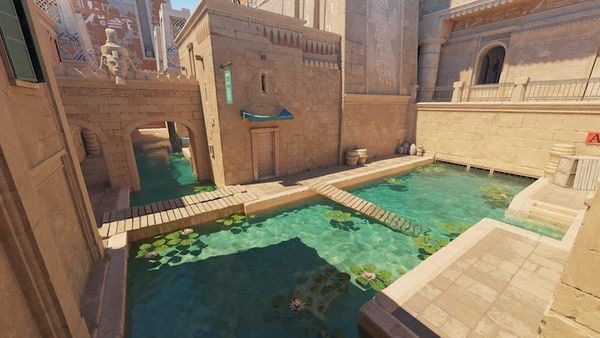
Anubis Utility Changes Demand More Precise Teamplay
The Counter-Strike 2 update of 22 January 2026 brought Anubis back into the Active Duty Map Pool in place of Train. Valve has made some changes to the map’s geometry, but overall it is the same CS2 Anubis as before. The main changes are the position of the doors in the Middle, the relocation of the bridge ramp closer to the Mid Doors, the opening above the E-box at Site B, and the repositioned crates at Site A. These details affect standard timings and grenade trajectories, so even players who want to perform well on this map should check the grenade landing zones before the start of Premier matches.
For teams, the main value of these utilities lies in restricting the opponent’s line of sight and creating favourable conditions for advancing onto the main area. At A, smoke grenades should block dangerous angles from Heaven and the CT spawn, whilst flashbangs help players advance via A Main or the Connector. On B, it is particularly important to coordinate entries from the Canal and Palace sides, preventing the CTs from controlling the open approaches. If five players throw grenades simultaneously but fail to synchronise their movements, the effectiveness of this tactic is minimal. A single smoke grenade, used at the right moment, can be more valuable than three thrown without a clear plan.
A useful basic training plan for smoke grenades on Anubis consists of three stages. First, the team practises key smoke grenades and flashbangs from specific positions, then checks their fall times, and finally incorporates player movement and exiting onto the plinth. When playing defence, the strategy is similar, except that you need to use grenades to delay the enemy’s advance and gather intelligence, whilst, where possible, saving some utility for a retake.
MR12 Economy Rewards Discipline Over Risky Buys
Newcomers might be wondering what the MR12 format means, but it’s quite simple. MR12 involves a maximum of 12 rounds per side, with victory awarded upon reaching 13 rounds under standard conditions. This has increased the pace of matches and made every move by the teams more crucial. If players spend all their money on an incomplete buy, lose the round and lose their weapons, a full buy in the next round may be at risk.
In Counter-Strike 2, the buy depends on each player’s funds, the available team budget and the current score. For example, when watching professional CS2 matches or reading the latest gaming news, you may notice that teams employ similar economic strategies. If three players can buy an AK-47 or an M4, but two are left without body armour and grenades, the team must choose between a shared partial buy and saving funds. The second option often allows for a stronger follow-up round, but puts victory in the current round at risk.
It is worth illustrating this economic calculation using the Anubis map as an example, where a successful push often requires several smoke grenades, flashbangs and incendiary grenades. If a team does not have enough money for 4 AKs and 1 AWP, it would be wiser to purchase 2–3 rifles and the necessary utility items. At the same time, excessive saving also creates a problem: if a team accumulates money but does not spend it on upgrading their weapons, this reserve is of no use. The captain must take into account the score, the opponent’s funds and the probability of winning a particular round, and build a strategy based on this.
Mid Control Connects Utility With Round Planning
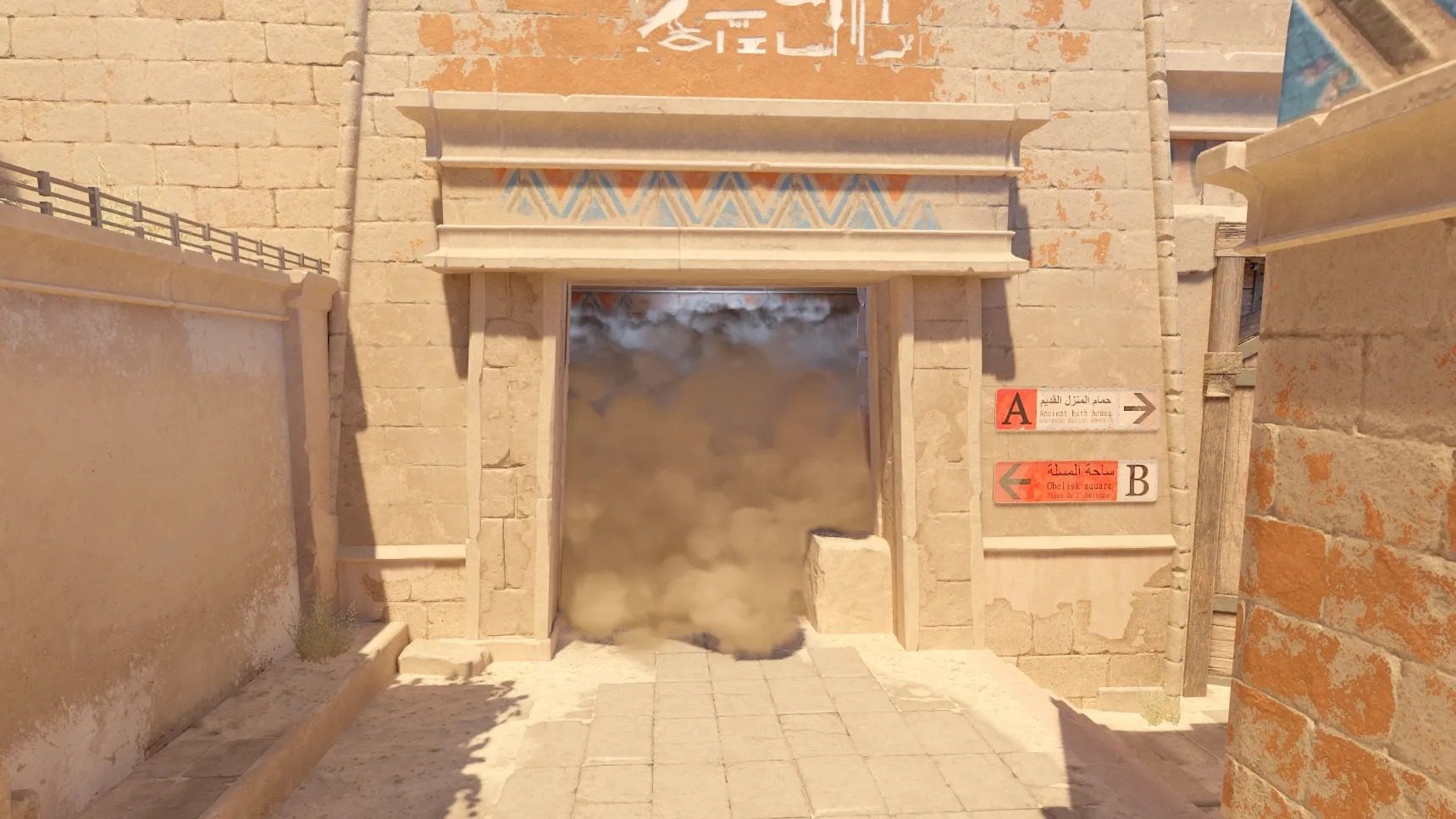
Anubis Mid is one of the most crucial parts of the map. Control of this point affects access to both bomb sites and rotation options. A team that leaves mid unguarded risks allowing the opponent to pass through the Canal or the Connector and attack from multiple directions. When analysing the play of professional teams, it is clear that they do not always rush to the plant site in the opening seconds of a round. They may first use a smoke or flashbang to create space, check the mid area and the CTs’ reaction, and only then decide whether to continue the attack.
Defence also requires a flexible plan. If the CT team uses up all their grenades at the start of the round, the opponents can simply rotate, and it will then be much more difficult for the CTs to move to the other side of the map. The optimal use of grenades depends on the information the team has already gathered. One player can apply pressure on the Middle, another can monitor a potential route through the Canal, whilst the rest hold their positions so that a quick rotation remains possible. It is important not to leave a single defender one-on-one with several opponents without support.
Premier teams should practise not only standard attacks but also how to respond to early aggression from the opposition. If defenders frequently push through the Middle, the attacking side can station two players in that position instead of one and provide them with grenade support. If, on the other hand, the opponent takes their time and saves their grenades for the retake, it is useful to plan your positions after planting the bomb and avoid going into duels alone. In practice, the team that wins is the one capable of adapting its strategy based on the information it receives, rather than mechanically repeating the same set play every round.
Conclusion
Putting all the facts together, it’s fair to say that Anubis and the MR12 format require CS2 teams to plan meticulously. These skills can be developed through regular training and match analysis, as well as by taking our advice on board. Changes to the map’s layout have altered timings and grenade placement, whilst the shorter format has increased the cost of failed buys and lost weapons. Premier teams should focus on three things: synchronising utility usage with player movements, making collective decisions regarding the economy, and controlling the Middle without taking unnecessary risks. Success does not depend on how many grenades a team has bought or how much money is left in their account. What matters most is the quality of how these resources are utilised and the rounds won.