

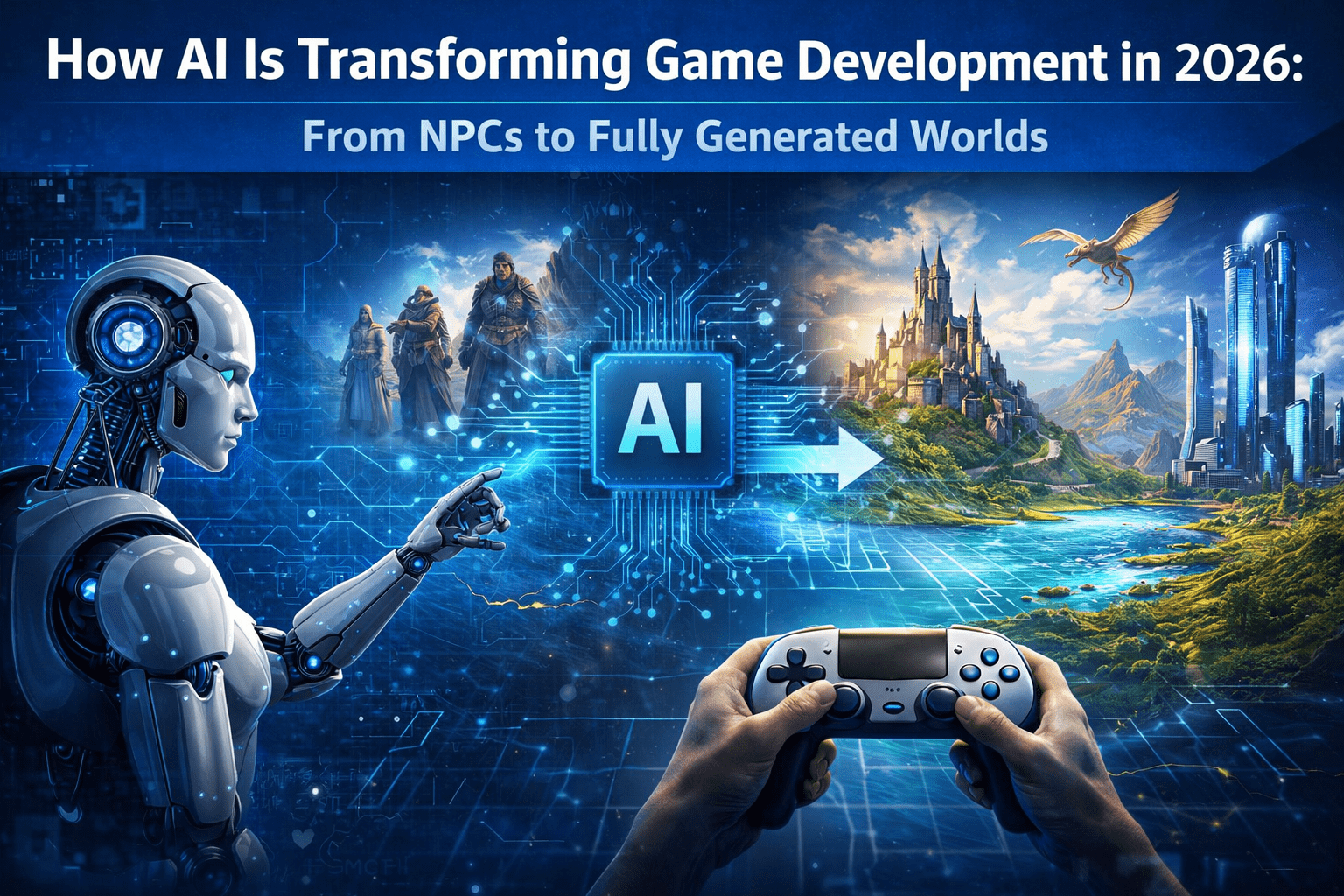
Introduction
AI didn’t sneak into games quietly anymore – by 2026 it’s everywhere in the pipeline, and a lot of developers are openly frustrated about it. Studios are trying to move beyond old fixed scripts and pre-written dialogue toward systems that can react, adapt, and even build pieces of the world while you’re playing. The dream is dynamic experiences that feel different each time. The reality is messier, with plenty of pushback. It reminds me of those tense rounds in the Spyfall app – everyone’s watching for the fake, and one wrong generation can break the whole illusion.
The Evolution of AI in Games
Early game AI was straightforward and limited. Enemies followed basic paths, NPCs repeated the same animations and lines, and pathfinding just kept them from getting stuck on furniture. Behavior trees added a bit more structure, but everything still felt like it came from a checklist.
Machine learning and large language models changed that. Now AI can watch player actions in the moment and adjust. It’s less about making enemies smarter in a scripted way and more about creating responses that actually notice what you’re doing, even if the results are still inconsistent in many shipped games.
AI-Driven NPCs: From Scripts to Conversations
Classic NPCs broke fast if you went off the rails. They’d loop the same three lines, ignore your choices, or stand there looking confused. That killed immersion quickly.
Some newer prototypes use LLMs so characters can hold real back-and-forth talks. They remember what you said earlier, get annoyed if you keep lying, or even turn down a quest because it doesn’t fit their personality. At events this year people showed towns where random NPCs could negotiate or refuse based on how you treated them before. It opens the door to stories that feel less pre-planned, though keeping them consistent and in-character is still a headache.
Procedural Generation vs AI Generation
Procedural generation has been a staple for years – roguelikes and big open worlds use algorithms to mix up levels and terrain. You get variety, but after a while a lot of it starts feeling samey or weirdly empty.
AI tries to go further by understanding context. Tools can generate quests, maps, or side missions that attempt to match the tone and your play style instead of just rolling random numbers. The hope is replayability that doesn’t wear out as fast because the system is trying to make things fit together logically rather than throwing pure chaos at you.
Personalized Gameplay Experiences
Games are starting to pay closer attention to how each person plays. If you charge in aggressively every fight, the AI might ramp up combat encounters or difficulty in those moments. If you prefer sneaking and talking, it leans into more dialogue branches and quieter paths.
Over sessions it quietly builds a sense of your habits. Two friends can boot up the same title and walk away with noticeably different runs – one packed with extra bosses, the other full of unique side stories and relationship moments. It turns a single game into something that starts feeling tailored, even if the tech is still early and sometimes clumsy.
AI in Game Development Workflow
Inside studios, AI mostly tackles the grind work that used to eat up weeks. Generating temp assets, spitting out dialogue variations, running quick tests, or helping sketch early prototypes – those repetitive tasks get done faster so people can focus on the parts that actually need human judgment.
Smaller teams especially feel this. They can try out wild ideas without a huge crew or months of crunch. Updates come out more often and experiments don’t bankrupt the project. For players who just want to play game online with friends, it often means patches land quicker and live-service stuff stays fresher because the team isn’t drowning in manual busywork.
Controversies and Risks
The backlash is loud and growing. The latest GDC survey showed 52% of developers now think generative AI is hurting the industry – way up from previous years – while only 7% see it as positive. Visual artists, designers, and writers are among the most negative, with many worried it’s cutting junior roles and flooding the market with low-effort filler.
Quality is a constant complaint. When teams lean too hard on generated content without heavy editing, worlds feel generic or “off.” Players spot the slop fast, and it breaks immersion. Add in arguments about training data scraping existing work, high energy costs, and who’s responsible when an NPC says something awful, and trust keeps dropping.
Impact on AAA vs Indie Studios
Big AAA studios mainly reach for AI to keep giant projects from blowing up in time and money. They use it for scaling environments, testing balance across tons of scenarios, or speeding up asset pipelines so schedules don’t slip as badly.
Indies get a different kind of help. Tools that used to need big budgets or specialist teams are more accessible now, letting solo devs or small groups prototype and ship ideas that would have been impossible before. This could lead to more weird, personal games hitting the market. Whether it truly levels the playing field or just creates two very different development worlds is still playing out.
The Future: Fully AI-Generated Games?
Some demos already show worlds spinning up from simple prompts or player choices, with maps and NPCs shifting based on what the community does. Persistent simulations that keep evolving even when you’re offline sound cool on paper.
Completely AI-made games aren’t total fantasy anymore, but most devs at events this year sounded skeptical they’d feel satisfying without strong human oversight. The tech handles scale and variation decently, but pacing, emotional beats, and that hard-to-pin-down “fun” factor still seem to need real people steering. The next few years will show how far it can actually go before hitting walls.
Conclusion
AI is pushing game development in new directions in 2026, from NPCs that can actually talk back to worlds that try to build themselves around how you play. Production is getting faster in places, and personalization is starting to show real promise.
At the same time the numbers from surveys are clear – a majority of developers see more harm than good right now, with worries about jobs, quality, and the flood of generic content. The smartest move looks like using AI for the drudgery while keeping humans firmly in charge of the creative heart. Players might get richer experiences if it works, but devs will have to navigate real skepticism and avoid turning games into forgettable slop. The next couple of years will decide if this becomes a genuine creative boost or just another hype cycle that leaves a mess behind.