

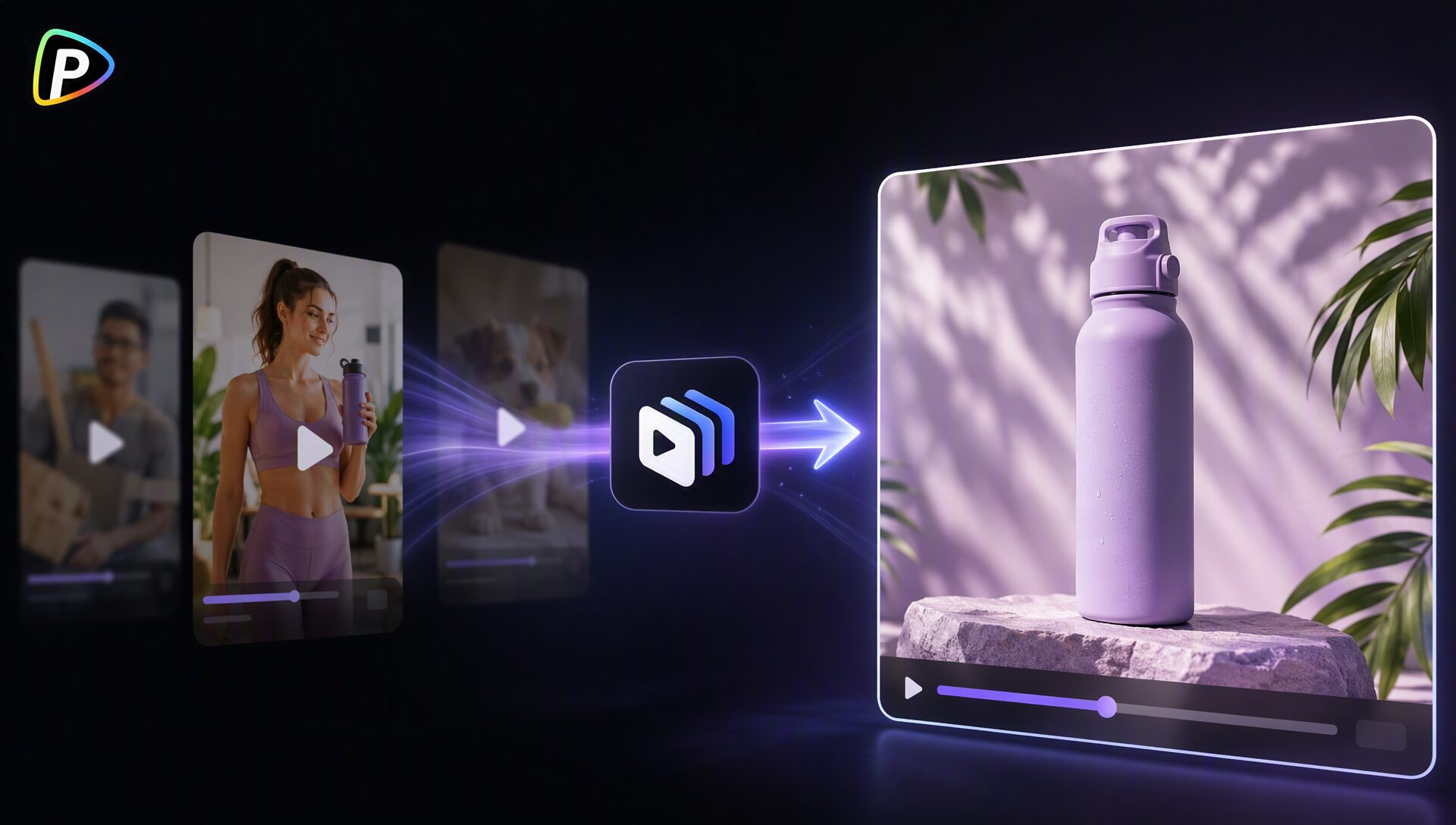
Creating a product ad can be difficult when a business has product information and images but no clear video concept. Starting without a reference may result in a weak opening, an unclear product message, or a video that looks polished but does not explain why the product matters.
Clone video Ads provide a reference-based way to develop new product videos. A business can use an existing ad to guide the new video’s structure, pacing, and presentation, then adapt the concept to its own product and marketing goals.
Why Use Clone Video Ads, and How Do They Work?
Many effective ads follow a clear sequence: they introduce a problem, show the product, demonstrate a benefit, or present a reason to buy. Identifying and recreating this structure can be difficult for sellers without advertising or video-production experience.
Clone video Ads simplify the process by using a reference ad as a creative starting point. The reference may influence how the new video opens, presents the product, or moves between scenes, while the new content is built around the user’s own product information.
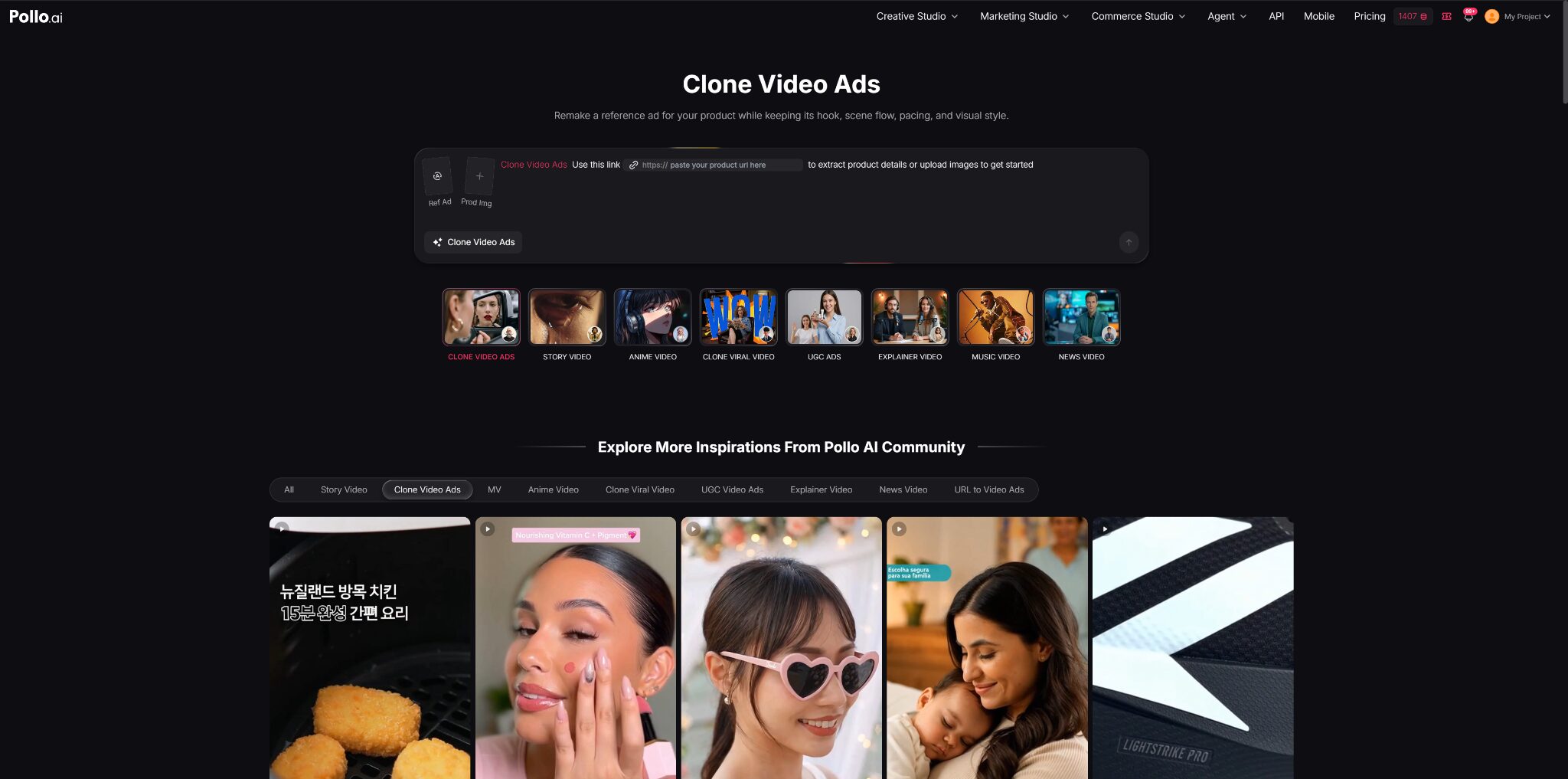
Pollo AI’s Clone Video Ads allow users to select a reference video or ad example and provide product details through images or a product link. These inputs are used to generate a new product-focused video based on the selected creative direction.
This approach can help businesses develop concepts more quickly and explore different ad formats. However, the reference should be chosen based on its structure and relevance, not only its visual quality. A visually impressive ad may still be unsuitable if its message or presentation does not fit the product.
How to Adapt a Reference Ad into a Product Video with Clone Video Ads
Step 1: Choose a Reference That Matches the Product
Select a reference based on how it communicates, not simply on how it looks. Consider whether it begins with a problem, introduces the product immediately, uses a demonstration, or follows a customer-review format.
The format should fit the product. A cleaning product may work well with a problem-and-solution sequence, while clothing may be better presented through lifestyle scenes. The reference should also suit the intended platform. Fast cuts may work for short social videos, while a product page may require clearer demonstrations.
Avoid references that depend heavily on a celebrity, recognizable brand, or highly specific setting. These elements may be difficult to adapt and may not support the new product’s message.
Step 2: Prepare Accurate Product Images and Information
Clear inputs are important because the generated video depends on the product materials provided. Use high-quality images that show the correct product, color, packaging, and design. If several images are uploaded, include different useful views, such as a front view, close-up, or product-in-use image.
When using a product link, make sure it leads directly to the relevant product page. The page should clearly identify the product and include accurate images and descriptions. Homepages, category pages, and search-results pages may contain unrelated information and make it harder to identify the correct product.
Before generating, check that the product images and written information are consistent. Conflicting colors, outdated packaging, or different product versions may lead to inaccurate results.
Step 3: Define the Main Message Before Generating
The new video should have one clear purpose. Decide what viewers should understand after watching it, such as how the product works, what problem it solves, or which benefit matters most.
Avoid trying to include every feature in a short video. Too many messages can make the product difficult to understand. Instead, choose one main benefit and use the reference structure to present it.
Instructions should be specific. Rather than asking for an “engaging” video, identify the target audience, main selling point, and intended platform. For example, a seller could request a short product demonstration for first-time buyers, with the product shown within the opening seconds.
Step 4: Check the Generated Video for Product Accuracy
The first output should be reviewed before publication. Check whether the product is recognizable, whether its appearance is accurate, and whether the main message is clear.
Pay close attention to product colors, packaging, logos, labels, and text. AI-generated content may occasionally produce visual inconsistencies, so important product details should not be assumed to be correct.
The opening should also connect to the product. If the first few seconds are visually interesting but do not establish the product or its benefit, viewers may not understand the ad’s purpose.
Step 5: Make Targeted Revisions
If the first version is close to the intended result, adjust the specific issue rather than changing the entire concept. A business may ask to show the product earlier, shorten the opening, emphasize a different benefit, or simplify a scene.
Pollo AI supports further refinement through additional instructions. Specific revision requests are generally easier to evaluate than broad requests to “make the video better.”
When testing several versions, change one major element at a time. For example, test a different opening while keeping the product message unchanged. This makes it easier to identify which change improves the ad.
Who Can Use Clone Video Ads?
Clone video Ads may be useful for ecommerce sellers creating product promotions, local businesses with limited video-production resources, and marketing teams testing different creative directions.
They can be particularly helpful when a business has product materials but needs a clearer structure for presenting them in video form.
Conclusion
Clone video Ads provide a practical way to develop product videos from strong advertising ideas. The result depends on choosing a relevant reference, providing accurate product materials, defining a focused message, and reviewing the output before publication.
A reference can guide the creative process, but it should not determine every part of the new ad. Businesses still need to consider their product, audience, and intended platform. Used carefully, clone video Ads can help create original product videos and make creative testing more manageable.