

Product provided for review. Links are not monetized.
I’ve spent a lot of time with handhelds and high-end tech, and I’ve been reviewing products for almost 20 years. I rarely have an opportunity to review a product, early, that is doing something unique. In this case, being the world’s first “MEMS+1DD+3BA Tribrid IEM”. But the Kiwi Ears Halcyon is doing something genuinely different by shoving a silicon MEMS driver into a tribrid setup. If you’re unfamiliar with the benefit of IEM (in-ear-monitors), simply put you’re trading wireless earbuds for superior sound quality, when done correctly.
If you have interest in the Halcyon, you’ll want to jump on the Kickstarter. Here is the pricing information for the Halycon Kickstarter tiers:
- Super Early Bird: $199
- Early Bird: $209
- Kickstarter Price: $219
- Retail Price: $259
By swapping out the heavy, power-hungry Electrostatics for a MEMS driver, Kiwi Ears has created a setup that’s faster and more precise than traditional earbuds. This is a big leap in audio engineering. Usually, “Tribrid” IEMs mix three types of tech: Dynamic Drivers (DD), Balanced Armatures (BA), and Electrostatic (EST) drivers. I am not an audiophile, but after reviewing several Kiwi Ears products, I’m learning the terminology and I definitely notice the difference day to day when I switch from Kiwi Ears products back to my AirPods Pros 2. Here is a breakdown to help understand why this change to MEMS matteres.
1. The MEMS Driver (The High-FrequencIES)
- What it is: Micro-Electro-Mechanical System. Imagine a tiny silicon chip that vibrates to create sound. It’s “solid-state” audio.
- What it does: Because silicon is much stiffer and lighter than the plastic or metal used in traditional drivers, it can start and stop instantly. This translates to ultra-clear highs, like cymbal crashes and guitar transients without any “smearing.”
2. The 1DD (The Sub-Woofer)
- What it is: A 10mm Dynamic Driver.
- What it does: This is the muscle. While the MEMS handles the delicate high sounds, this moves the air needed for sub-bass and mid-bass. While gaming, this provided more “thump” to the experience.
3. The 3BA (The Precision Mid-Range)
- What it is: Three Balanced Armature drivers.
- What it does: These are the workhorses for the mid-range and vocals. Having three dedicated drivers here ensures that the vocals stay “forward” and clean. This is likely why your wife found pop music so appealing on them—the vocals aren’t getting drowned out by the bass or the high-frequency sparkle.
Why the “Tribrid” Mix Matters
The problem with using just one type of driver is that they all have “blind spots”:
- Dynamic Drivers are great for bass but can be “slow” and muddy in the highs.
- Balanced Armatures are detailed but can sound “metallic” or thin in the bass.
- MEMS are incredibly fast but don’t move enough air for deep bass.
By combining all three, the Halcyon uses each driver only for the frequencies it’s best at. It’s like having a dedicated subwoofer, a set of studio monitors, and ultra-high-end tweeters all jammed into a single earbud.


Design & Build: Premium and Practical
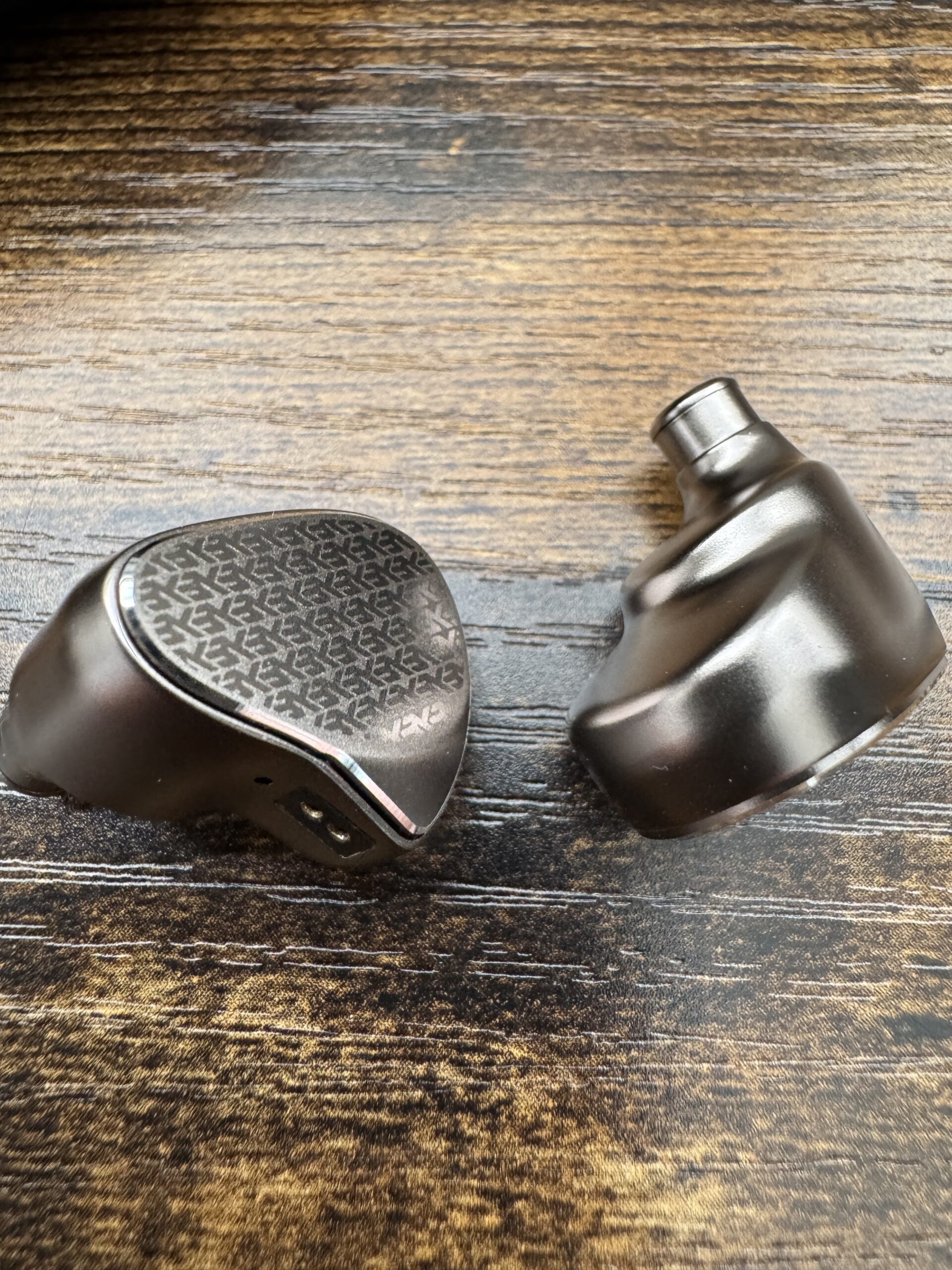
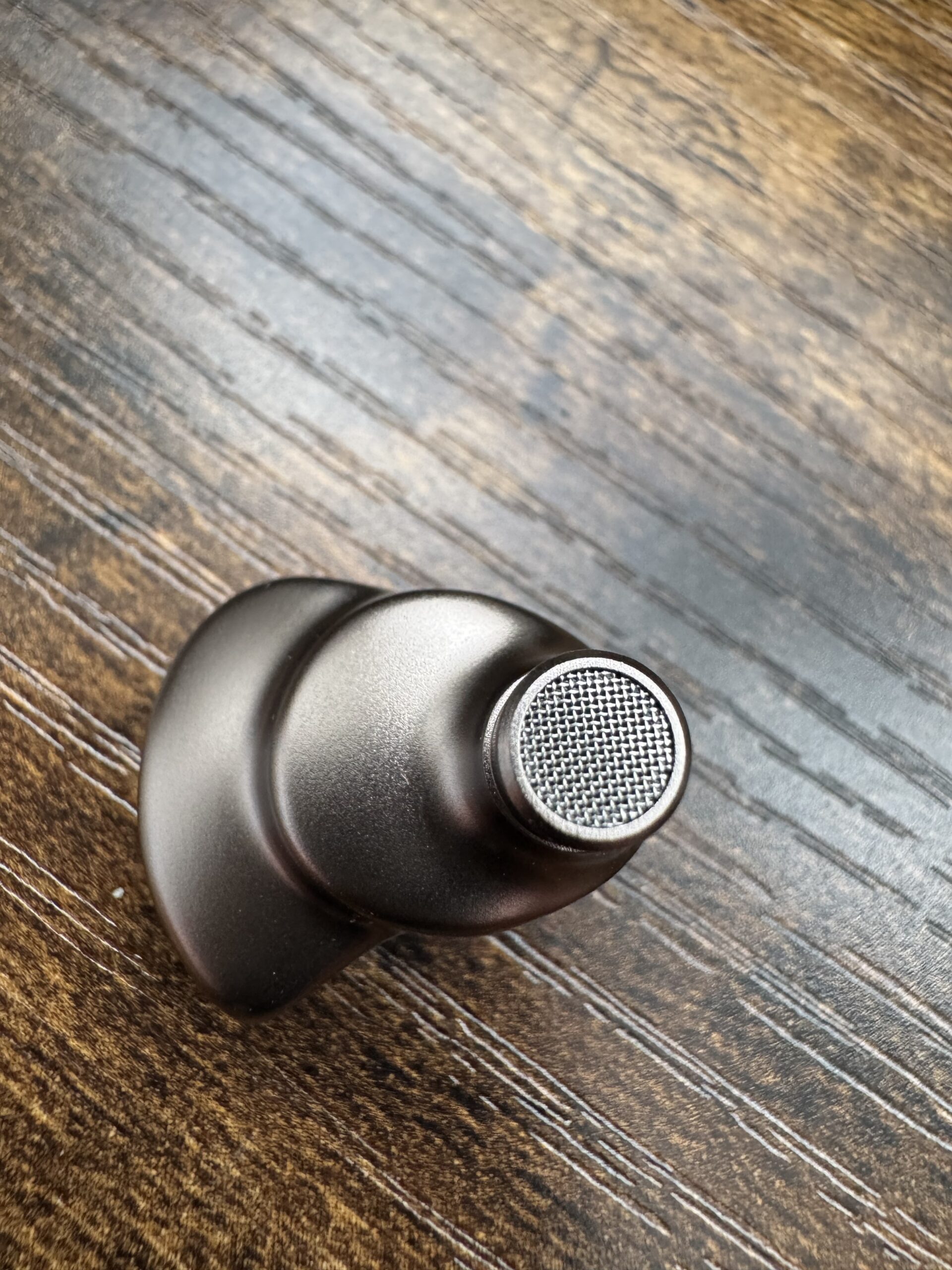
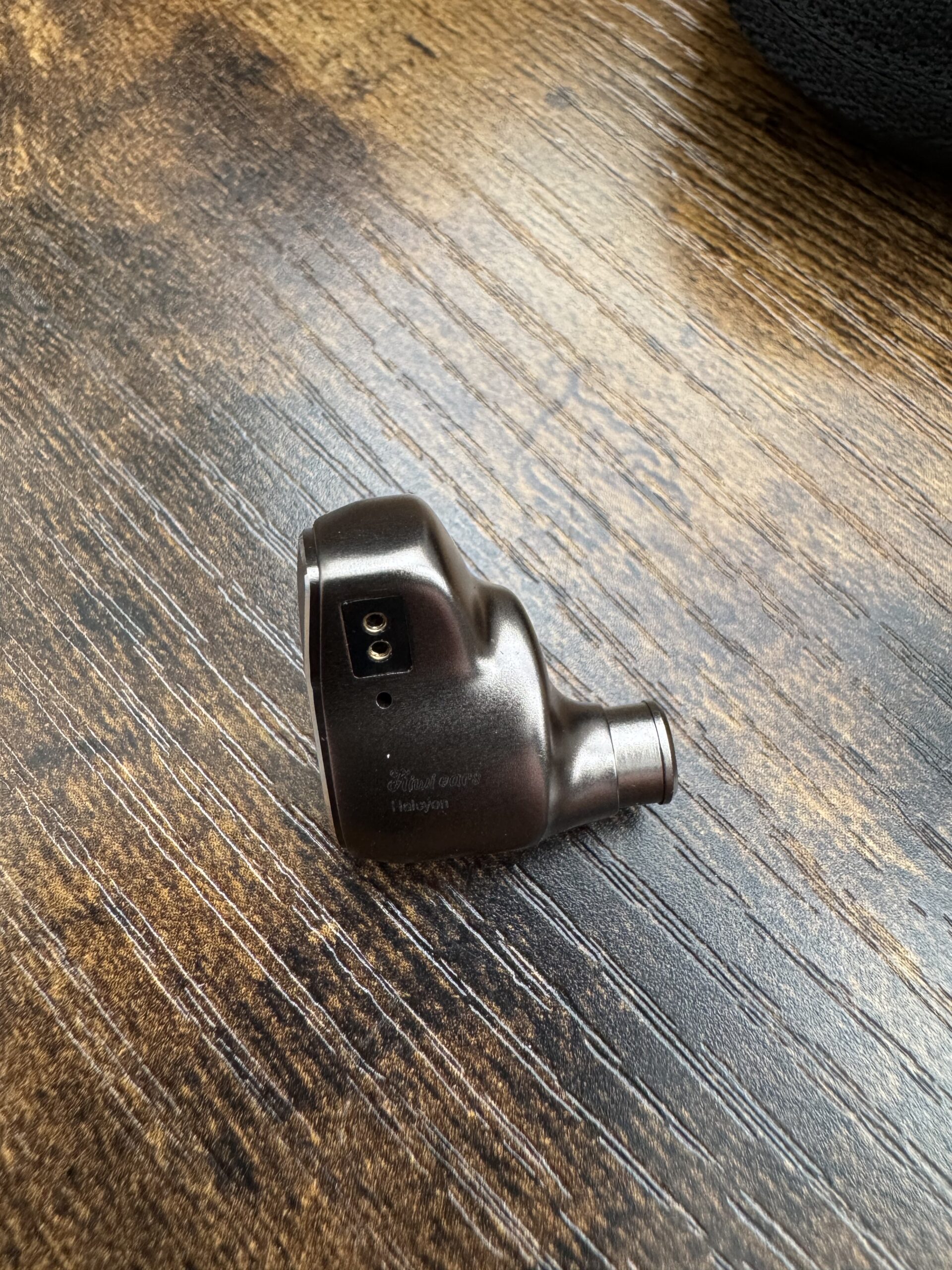
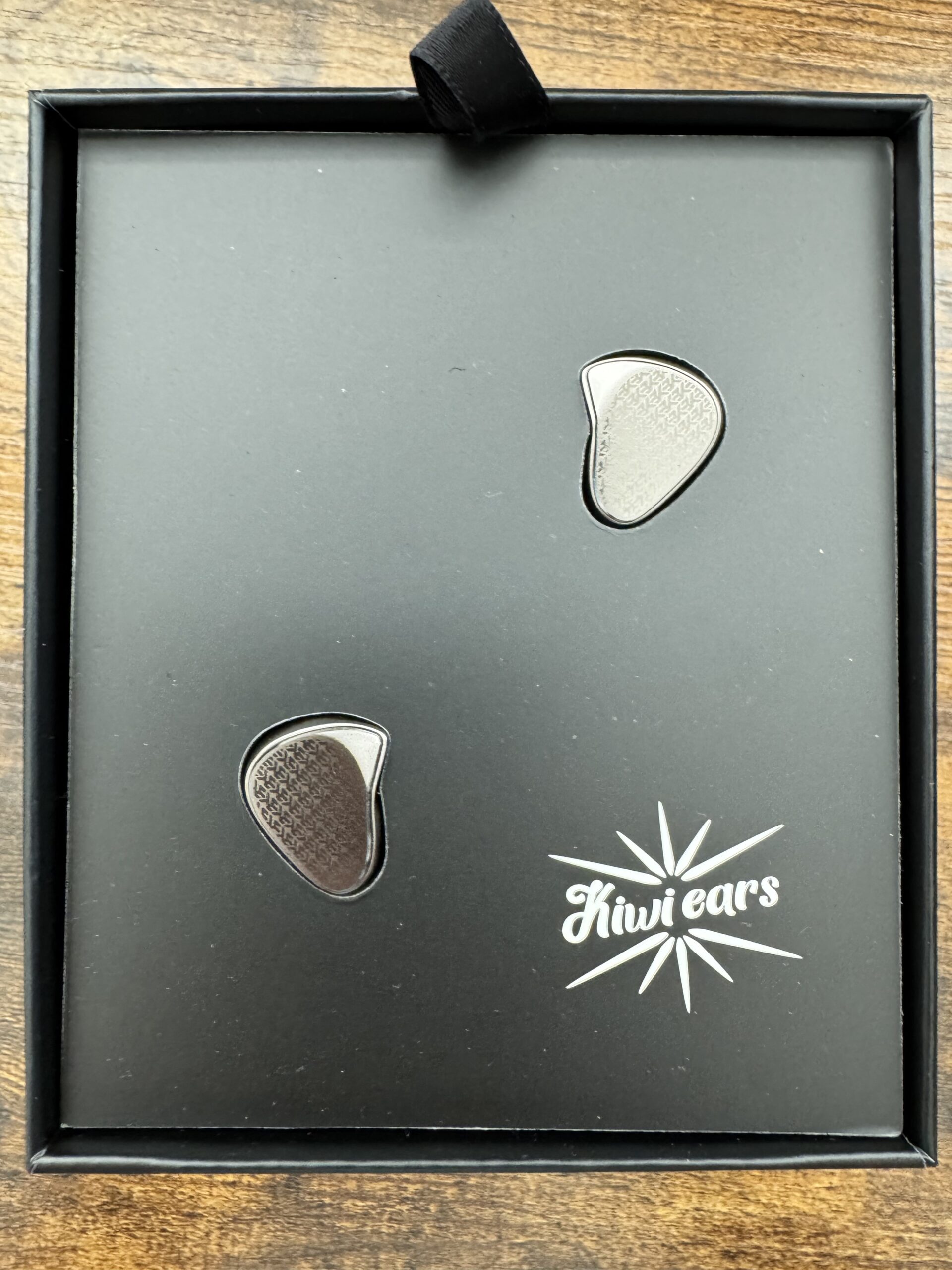
First off, these things are gorgeous. Kiwi Ears went with a CNC-machined aluminum housing that feels incredibly premium without being heavy. They’ve managed to keep the shells surprisingly light, which is a huge win for long-term comfort. The material reminds me of the chassis of the MacBooks. The aesthetic is tied together by the cables—a brownish-red weave that compliments the metallic finish of the IEMs perfectly.
Technical Specifications (Information provided by Kiwi Ears)
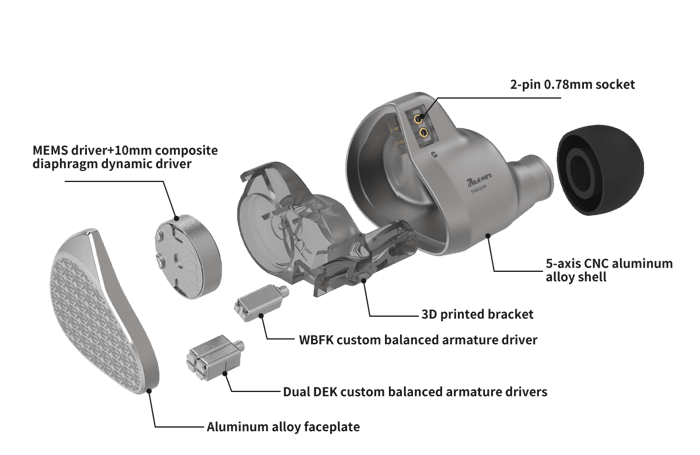
The Halcyon is designed with a five-driver internal architecture per side, aimed at achieving ultra-fast treble response and studio-grade tonal balance.
- Driver Configuration (Tribrid): * 1x USound MEMS Driver: Handles the ultra-high frequencies. These solid-state silicon drivers are known for their extreme speed and precision compared to traditional coils.
- 1x 10mm Composite Diaphragm Dynamic Driver: Dedicated to the sub-bass and bass regions for physical impact and depth.
- 3x Custom Balanced Armatures (BA): * 2x custom DEK drivers for the mid-range.
- 1x custom WBFK driver for the high frequencies (working in tandem with the MEMS driver).
- Frequency Response: 10Hz – 42kHz
- Sensitivity: 109dB (at 1kHz/mW)
- Impedance: 29 Ohms
- Distortion: <1% (at 1kHz)
- Build: CNC-machined aluminum housings with a 0.78mm 2-pin detachable cable system.

Performance: Rock, Grunge, and Gaming
I’ve been testing these across a few different use cases, and the clarity is what stands out immediately. Most of my listening time with the Halcyon have been with gaming. I’m currently playing Bo: Path of the Teal Lotus, which features beautiful, Japanese-inspired music and sounds. Additionally, I’m playing Pragmata. It’s a game that has a lot of action and sounds, deep in the environment.
- Gaming: Thanks to that MEMS driver and the triple BA setup, the imaging is pinpoint. In competitive shooters or even atmospheric RPGs like Diablo 4, the directional audio is razor-sharp.
- Music: As someone who leans into rock and grunge, I was looking for how they’d handle grit and texture. They sound amazing. The 10mm dynamic driver gives the low end enough punch for those heavy bass lines, while the MEMS driver keeps the cymbals and electric guitar transients from getting lost in the mud.
- The Pop Test: My wife took them for a spin with some pop tracks. She loved the Halcyon and said she doesn’t mind the cable if she’s working from home.
Who is this For?
Whether you’re plugging these into a high-end desktop setup or a portable gaming device, the Halcyon is a serious contender. If you’re seeking a cohesive, punchy, and ultra-clear experience, check out the Kickstarter!