

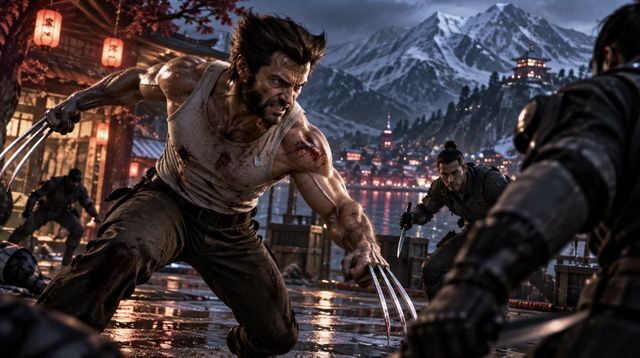
Marvel’s Wolverine has become one of the most closely watched superhero games in development since its announcement in 2021. Insomniac Games plans to bring Logan to PlayStation 5 in fall 2026, giving the character a major standalone console title built around his personality, combat style and history. The project also expands the studio’s work with Marvel characters beyond Spider-Man and gives PlayStation another large single-player action game for the current console generation.
The timing matters because players now move easily between several forms of digital entertainment. A person may spend an evening with a story-driven console title, switch to a competitive multiplayer game or open shorter online games that require little setup. Casino-style services such as cowboyspin casino belong to that last category, with digital slots and other online games designed around brief sessions and direct interaction. Searches for the best online сasino represent another part of adult gaming activity. Marvel’s Wolverine targets a very different audience and structure: it puts narrative, exploration and close-range action at the centre of a full-scale console production.
Insomniac revealed new gameplay footage during a PlayStation State of Play presentation in September 2025 and confirmed a fall 2026 launch window. The footage showed Logan fighting enemies with his claws, moving through several locations and confronting characters connected to his comic history.
Wolverine Requires a Different Type of Superhero Game
Insomniac already has extensive experience with superhero action, but Wolverine creates different design requirements.
Spider-Man relies heavily on movement. Web-swinging lets players travel quickly across large urban spaces, while combat uses acrobatics, gadgets and rapid repositioning. Logan approaches conflict differently. His claws, physical strength and healing ability encourage close combat.
The gameplay footage reflects that difference.
Wolverine fights enemies at short range and uses direct attacks rather than maintaining distance. He can strike individual opponents, respond to attacks and use his claws during aggressive sequences. The game also features a more mature presentation than Insomniac’s Spider-Man titles.
That choice fits the character.
Logan’s stories frequently deal with violence, memory, military experimentation and the consequences of his long life. A game that reduced those elements too heavily would struggle to represent the source material.
Insomniac therefore faces a clear task: create combat that feels physically forceful without allowing violence to become the only reason to continue playing.
Combat Will Carry Much of the Experience
The claws immediately create expectations.
Players know what Wolverine can do, so the combat system needs to make his abilities feel functional rather than decorative. The footage shows attacks that use his claws directly, along with takedowns and physical interactions with enemies.
The developer has described Logan as a character who can become dangerous and aggressive during combat. That creates room for encounters that differ significantly from the studio’s previous superhero games.
Several design elements will determine how well the system works:
- enemy reactions to close-range attacks;
- movement between multiple opponents;
- defensive actions and counterattacks;
- the role of Logan’s healing ability;
- environmental interactions during fights;
- enemy types that require different tactics.
Healing creates a particularly interesting design problem.
Wolverine can recover from injuries that would stop an ordinary person. If developers make that ability too powerful, combat could lose tension. If they restrict it excessively, Logan may not feel consistent with his established powers.
The game needs rules that preserve both sides of the character.
Logan’s Healing Factor Changes the Basic Rules
Most action games use health as a simple limit. Players take damage, find recovery items or reach checkpoints.
Wolverine allows designers to approach health differently.
His body can repair significant injuries, so regeneration can form part of moment-to-moment gameplay rather than act as a separate resource. Insomniac can use that ability to encourage aggressive combat while still punishing careless decisions.
The studio can also connect physical damage to visual storytelling.
If Logan suffers injuries during a fight and visibly recovers afterward, the game can communicate his powers without stopping to explain them through dialogue.
That system could also support difficulty settings. Developers could change regeneration speed, enemy damage and combat pressure without changing Logan’s basic identity.
However, healing alone cannot create engaging encounters. Enemy behaviour, positioning and attack patterns still need to force players to make choices.
The Story Moves Beyond One Familiar Setting
Insomniac has confirmed that Marvel’s Wolverine will take Logan through several locations rather than restricting the game to a single city.
The gameplay material includes Madripoor, a fictional island with a long connection to Wolverine and other Marvel characters. The developer has also shown snowy wilderness and other environments, suggesting that the story will move across several regions.
That structure suits Wolverine.
Unlike heroes closely associated with one city, Logan has stories connected to Canada, Japan, Madripoor and many other locations. His history includes military service, secret programmes, mutant conflicts and international events.
A multi-location format lets the developers reflect that background.
It also changes how players may experience exploration. Instead of one continuous metropolitan map, the game can use separate areas with different combat conditions and visual identities.
| Design area | Confirmed or indicated direction |
| Main character | Logan/Wolverine |
| Platform | PlayStation 5 |
| Launch window | Fall 2026 |
| Core action | Close-range claw combat |
| Tone | Mature superhero action |
| Locations | Includes Madripoor and other regions |
| Supporting characters | Includes established Marvel figures |
| Structure | Single-player action adventure |
The variety of settings could also help control pacing. Dense urban sections can support close encounters, while larger outdoor environments can change movement and enemy placement.
Familiar Marvel Characters Will Expand the Story
The game does not isolate Logan from the wider Marvel universe.
Insomniac has confirmed several characters connected to Wolverine’s history. Mystique appears in promotional material, while Omega Red and Sentinels also feature in the project.
Their inclusion tells players something about the scope of the story.
Mystique brings mutant politics and personal conflict. Omega Red gives Wolverine an opponent with physical abilities suited to close combat. Sentinels connect the narrative to the wider threat against mutants.
The challenge involves using these figures without turning Logan into a secondary character inside his own game.
A standalone Wolverine title needs to keep his decisions, memories and relationships at its centre. Supporting figures can add context, but the story still needs to work as Logan’s story.
That balance could determine how Marvel gaming develops after 2026.
The Game Expands Insomniac’s Marvel Work
Marvel’s Wolverine exists within the same broader universe as Insomniac’s Spider-Man games. The studio confirmed that connection years ago, though that does not mean players should expect constant crossovers.
The important point concerns continuity.
Insomniac now has room to develop superhero stories around characters with very different powers and tones. Spider-Man supports urban movement, aerial traversal and fast combat. Wolverine supports heavier physical action and a more adult narrative.
If both can exist within one fictional continuity, future games do not need to follow a single mechanical template.
That gives Marvel gaming more room to vary its structure.
A superhero title can focus on one city. Another can move across several regions. One protagonist may rely on speed and gadgets, while another uses direct physical attacks.
This approach treats individual characters as the starting point for design rather than forcing every Marvel property into the same system.
A Mature Rating Changes What Developers Can Show
The footage for Marvel’s Wolverine makes its intended tone clear.
Combat contains stronger violence than players normally see in Spider-Man games. That direction makes sense for Logan, whose claws and fighting history create difficult questions for any lower-intensity interpretation.
A mature approach does not require constant graphic content.
The more important issue involves consequence.
When Logan attacks someone with metal claws, the game cannot present every encounter like harmless contact. Stronger visual feedback makes the mechanics correspond more closely with the character’s abilities.
The developers can also use the mature tone outside combat.
Wolverine’s history includes trauma, memory loss, experimentation and difficult personal relationships. A story aimed at an older audience can address those subjects directly.
That could make Marvel’s Wolverine important for superhero games beyond its combat system. It tests how a major console project can handle a comic character without aiming for the widest possible age group.
PS5 Hardware Shapes the Technical Expectations
Marvel’s Wolverine targets PlayStation 5, so players will naturally expect the project to use the console’s hardware more extensively than games that also support the previous generation.
Fast storage can reduce loading interruptions between areas. The controller can communicate different physical actions through haptic feedback and adaptive triggers. Modern lighting and animation systems can add detail to characters and environments.
Yet technical complexity needs to serve gameplay.
Fast loading matters when it keeps the player moving. Detailed animation matters when it helps attacks feel readable. Controller feedback matters when it communicates contact, damage or movement.
Performance will also attract attention.
Close-range combat requires clear input response, especially when several enemies attack at once. Visual detail cannot interfere with the player’s ability to understand an encounter.
Insomniac’s technical work will therefore matter most when players stop noticing it as a separate feature and concentrate on controlling Logan.
The 2023 Data Breach Changed the Development Context
Marvel’s Wolverine also has an unusual development history.
A major cyberattack against Insomniac in 2023 exposed internal information and unfinished material from several projects, including Wolverine. The incident placed incomplete development work online years before the studio planned to show it publicly.
That distinction matters.
Early development material does not represent a finished game. Studios constantly replace animations, mechanics, environments, dialogue and interfaces during production.
Players therefore gained little useful information by judging the final project through unfinished assets.
The official gameplay presentation offered a much clearer view because Insomniac selected footage that reflected its intended direction.
The episode also highlighted a broader problem for large game studios. Development now involves enormous quantities of digital data, and security breaches can expose years of work.
For Wolverine, the official 2025 presentation effectively reset the public discussion around material that the studio actually wanted players to evaluate.
Marvel Gaming Has Become More Selective
Marvel games have taken many forms over the decades, from fighting titles and arcade projects to open-world adventures and tactical games.
Recent years have shown that a recognisable character alone cannot determine whether a project connects with players.
Gameplay structure matters. So does the relationship between mechanics and the protagonist.
Wolverine offers a straightforward example.
A combat system based on long-range weapons would make little sense for Logan as the main design choice. Claw attacks, physical movement and regeneration directly reflect his abilities.
That sounds obvious, but licensed games have not always followed that principle.
The current generation of Marvel projects increasingly gives individual studios room to build around specific characters rather than requiring every title to follow one formula.
Marvel’s Wolverine could strengthen that approach if the finished game maintains the identity shown in its official footage.
The Project Could Affect Future Character Choices
Wolverine also tests whether major superhero games can move beyond a small group of characters who already dominate console and film attention.
Logan has considerable recognition, but his mechanics differ sharply from those of many traditional action-game protagonists.
If players respond strongly, publishers may see more value in matching individual Marvel characters with specific gameplay formats.
Some heroes could suit stealth. Others could support tactical systems, cooperative play or smaller narrative projects.
Not every character needs an enormous open world.
Wolverine’s multi-region structure already suggests another route. Developers can build several substantial environments while maintaining tighter control over pacing and story progression.
That model may prove particularly useful for superhero stories that require international locations but do not need one continuous map.
What Players Should Watch Before Launch
Insomniac has shown enough material to establish the project’s direction, but several important questions remain before fall 2026.
The next major presentations need to clarify exploration, mission design and progression. Players know much more about combat than about the systems surrounding it.
The structure of individual areas also remains important.
Will players explore Madripoor freely between missions? Will each region contain optional activities? How will Logan travel across larger spaces? How much control will players have over upgrades?
Those questions will determine whether Marvel’s Wolverine functions mainly as a focused action title or adopts a broader action-adventure format.
Difficulty design deserves attention as well.
Wolverine’s powers create a natural tension between making the player feel physically formidable and ensuring that enemies remain dangerous. The final systems need to maintain that balance throughout the campaign rather than only during major encounters.
A Different Direction for Marvel Games
Marvel’s Wolverine matters because it does not simply repeat the structure that already worked for another superhero.
Everything shown so far points toward a game built specifically around Logan: close combat, regeneration, mature violence, international locations and characters tied directly to mutant history.
That approach could matter more for Marvel gaming than any single technical feature.
Licensed games work most effectively when developers start with the character and ask what type of interaction fits that person. Wolverine gives Insomniac a chance to demonstrate that principle on a large scale.
The fall 2026 launch will also expand the studio’s connected Marvel universe beyond Spider-Man. That creates possibilities for future stories without requiring Wolverine to function as a setup for another project.
For now, the game needs to succeed on its own terms.
Players will expect responsive claw combat, meaningful use of Logan’s healing factor, strong enemy design and a story that treats his history seriously. They will also expect the different locations to serve gameplay rather than exist only as visual changes.
Marvel’s Wolverine already represents a major change of pace for Insomniac’s superhero work. If the finished PS5 game delivers on the systems shown so far, it could also show Marvel and its development partners how much room remains for character-specific ideas in large-budget superhero games.