

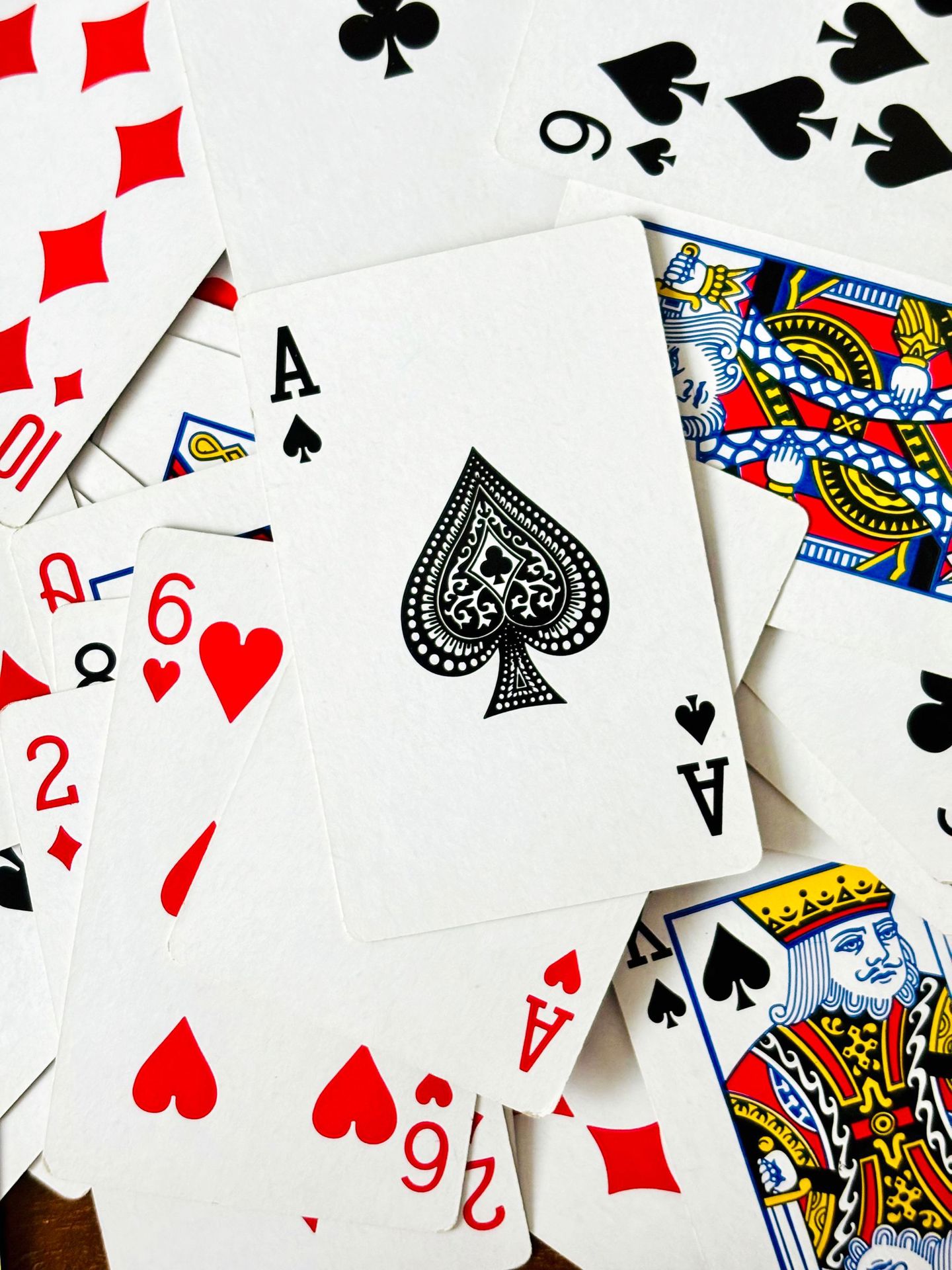
Sit down alone at a blackjack table and you could see around 209 hands in an hour. Pull up a chair at a full table of seven players and that number falls to roughly 52. Those figures come from Jim Kilby’s Casino Operations Management, reproduced by Wizard of Odds, and they’re based on a study run in an Australian casino where seven decks of an eight-deck shoe were dealt before the cards went back for shuffling.
Four times the hands, same hour, same dealer.
Dealing speed has little to do with it. The gap comes down to how many people are sharing the table and how often the cards go back to be mixed. Shuffle frequency sets the tempo of everything else, and once you can hear that tempo you’ll notice it at every live table you join. If you play from New Zealand, you’ll see it across the live blackjack tables at spinbet, where the format in front of you decides how much of your evening a single shoe takes up. So it’s worth knowing how long a reshuffle takes in seconds, what the pause is worth to you, what the mathematics of shuffling proves about why it happens at all and how to read a table’s pace before you commit your first bet. The reshuffle turns out to be the most useful thirty seconds at the table.
Where The Minutes Go
Most parts of a live table are unpredictable. Players deliberate at different speeds, someone joins mid-shoe, a chat message pulls the dealer’s attention. The shuffle is the exception, because it’s a mechanical process with a published spec.
TCSJOHNHUXLEY lists its A Plus Shuffler at 25 to 28 seconds per deck, with capacity for one to eight decks. Run the arithmetic on a full eight-deck load and you’re looking at something close to three and a half minutes of machine time. At the faster end, Global Gaming Business reported the DeckMate 2 completing a shuffle in 22 seconds while also verifying every card optically, twice the speed of the unit it replaced.
So the interval sits somewhere between half a minute and a few minutes, depending on the equipment and how many decks are in play. That’s a known quantity, which makes it something you can build around. Think of it as the table’s metronome: everything else drifts; this doesn’t.
You’ll find these formats side by side at most live studios, and the differences show up quickly once you’re watching for them. Live dealer games streamed in HD sit alongside blackjack variants including Pontoon on Spinbet’s New Zealand casino, which is a familiar name to Kiwi players who grew up on the local version of the game. A fixed interval is only worth something if you decide to use it, which brings us to the part most players skip.
Half-Time For Your Bankroll
Shuffle frequency is a pacing dial, and you get to choose where it sits.
New Zealand players already think in sessions. The 2025 NZ Esports Gamer Survey found respondents spending 2.8 hours a day gaming and 2.4 hours on social media, so the vocabulary of halves, respawns and match intervals is second nature. The same instinct applies away from the tables, where anyone who plans a long stretch of play knows the value of regular breaks during marathon gaming sessions instead of grinding on without one. A shoe game hands you a whistle every few minutes. A continuously shuffled table plays on with no break built in.
The equipment makers are open about this. Scientific Games says its ShuffleStar continuous shuffler increases hands per hour by up to 20% by removing the downtime needed to load or shuffle a shoe, and Justin Keane, the company’s Director of Table Games and Utilities for Asia, noted more than 950 units in operation worldwide as of late 2020, speaking to Asia Gaming Brief. That 20% is their own figure rather than an independent measurement, so treat it as a manufacturer’s claim; it does line up with what the hardware is designed to do.
| Shuffle format | What happens to the interval | How it feels at the table |
| Hand-shuffled shoe | Longest pause, dealer works through several decks by hand | Slowest tempo, most conversation, clearest break |
| Machine-shuffled shoe with cut card | Cards go to the machine at 25 to 28 seconds per deck (published spec) while a second shoe carries on | Short, regular pauses; steady rhythm you can time |
| Continuous shuffler | No pause at all, cards return to the machine after each round | Fastest tempo, up to 20% more hands per hour by the maker’s estimate |
None of this changes the odds of the game in front of you. It changes how many decisions you make in an evening, which is a different thing entirely and easier to control. Pacing tools help here too. Spinbet offers session time reminders and reality check notifications alongside daily, weekly and monthly deposit limits, so you can set your own interval whichever table you end up choosing.
I’ll admit the shuffle pause felt like dead air to me for years, right up until I started counting what fits inside it.
Seven Shuffles, Proven
There’s a reason the cards go back at all, and it’s more interesting than table procedure.
In 1992, Dave Bayer and Persi Diaconis proved that seven riffle shuffles bring a 52-card deck close to fully random, and that anything less leaves it measurably ordered. The result was published in Annals of Applied Probability and is summarised by Harvey Mudd College’s mathematics department and by Science News. Seven became the number everyone quotes.
That proof assumed precise cuts. In June 2026, Quanta Magazine reported a new result from Mark Sellke, Jialu Shi and Jiamin Wang showing that when the deck is cut at a random place each time, roughly 14 riffle shuffles are needed; it settled a question open since 1999.
Diaconis, the Stanford mathematician behind the original theorem, was warm about the new work. ‘It’s a fresh idea, and it’s remarkable that something like that would work as effectively as it does’, he told Quanta. ‘It’s a brilliant piece of mathematics’, he said in the same interview.
The scale involved explains the effort. A 52-card deck has close to an 8 followed by 67 zeros in possible arrangements, which means a properly shuffled deck sits in an order that has almost certainly never existed anywhere before. The same care shows up on the software side, where Spinbet’s games are tested by independent auditors with return-to-player percentages published for players to check. Which raises a question worth sitting with: have you ever considered that the pause you’re waiting through is the table doing the one job that can’t be hurried?
Reading The Room
You can work out a table’s tempo in about thirty seconds of watching, before you place anything.
- Look for a cut card sitting in the shoe; its presence tells you a reshuffle is coming at a set point.
- Watch where used cards go after each round, into a discard tray or straight back into a machine.
- Count the occupied seats, since occupancy moves hands per hour more than anything else does.
- Time one pause with your phone so you know the interval you’re working with.
- Check whether the table names its variant, which usually signals the rule set and shoe size too.
There’s plenty to choose between. Evolution finished 2025 with approximately 2,000 live tables, up from 1,700, running 24 studios across 16 jurisdictions after opening new sites in Brazil, the Philippines, Romania and New Jersey, according to its year-end report published in February 2026 and coverage in iGaming Business. Growth Market Reports valued the global live-dealer market at USD 8.6 billion in 2025, with blackjack holding roughly 26.5% of it and a projected 10.3% annual growth rate through 2034.
Closer to home, analysis of ANZ card transactions reported by Focus Gaming News estimated around NZ$1.36 billion in annual New Zealand online gambling spend, with about 360,000 unique customers by September 2025 and casino-focused platforms up 38% year on year. That figure extrapolates from one bank’s data, so it’s an estimate rather than a count, but it gives a sense of how many Kiwis are choosing tables on any given evening.
Choosing locally makes the whole thing simpler. Spinbet handles everything in New Zealand dollars with POLi and major bank support, and its 24/7 Kiwi-based support team can answer a question about a specific table without a time-zone delay. Thirty seconds of watching sounds fussy until it spares you an hour at the wrong pace.
The Pause Is The Point
Three threads tie together here. Shuffle frequency sets your tempo, tempo decides how much of your evening a table consumes, and the interval is the one fixed point in an hour full of variables.
The reshuffle is the only moment at a blackjack table when nothing is being decided. No bet, no decision, no outcome. That makes it the only stretch of the session that belongs entirely to you.
With table numbers still climbing and blackjack holding around a quarter of live-dealer play, the range of formats available to New Zealand players keeps widening. Tempo has become a choice rather than whatever loads first.
So pick your pace before you pick your stakes. If the table is already handing you a break every few minutes, what will you do with it?
Advisory Notice: Play for fun, not for profit. Decide how much you’re willing to lose before you begin and hold yourself to it. If you catch yourself trying to win back losses or feeling unable to stop, take that as your cue to step back. Free, confidential help is always available through Gambling Helpline whenever the stress outweighs the enjoyment.